


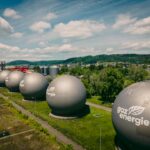
BE.Hydrogen Belgium meets EU valley best-practice
The Hydrogen Valleys Days event brought together regional clusters—BE.Hydrogen in Belgium, North Rhine–Westphalia nodes, and Luxembourg’s HY4Link precursor studies—to exchange engineering blueprints, permitting workflows and offtake contracts. BE.Hydrogen, a federal–Flanders–Wallonia initiative seeding gigawatt-scale electrolysers and repurposed pipeline spurs, exemplifies the valley model that the European Commission envisages as the backbone of RED III Article 27 additionality compliance. By co-locating renewable generation, electrolysis and industrial demand (steel, chemicals, refining), valleys generate the temporal and geographic correlation needed to certify RFNBO hydrogen without relying on grid-average emissions factors.
The Antwerp agenda included site tours of port electrolyser installations and panel discussions on cross-border guarantees of origin—critical as ReFuelEU Aviation’s 2030 SAF sub-mandate (2 % synthetic share) and the revised Renewable Energy Directive’s 42 % green-hydrogen quota for refineries converge. Compliance and marketing directors scanning the room knew that first-mover valley projects will anchor EU Delegated Acts on additionality, setting precedents for subsequent clusters from Iberia to the Baltics.
Electrolysis scale-up and the geological wild-card
Market intelligence released mid-May forecasts that the green hydrogen electrolysis sector will add USD 27.79 billion in capacity investment by 2032, a signal that financial institutions are shifting from PowerPoint announcements to bankable engineering, procurement and construction contracts. Yet even optimistic ramp curves leave a wedge: RED III’s 2030 and 2032 checkpoints arrive faster than many stacks can be manufactured, shipped and commissioned. Here the Lorraine natural-hydrogen discovery and its REGALOR II exploration programme offer an intriguing hedge. Serpentinisation-derived H₂ flows require no electrolysis CAPEX, no renewable-electricity curtailment risk, and—if certified under bespoke life-cycle-analysis rules—could supply hard-to-abate sectors while valley electrolysers scale. The HY4Link backbone, envisioned to carry both electrolytic and imported hydrogen across Belgium, Luxembourg, France and Germany, could just as readily blend geological hydrogen from sub-surface Lorraine reservoirs into the same molecules meeting refinery and aviation mandates.
What compliance officers should watch
First, track whether the European Commission’s upcoming guidance on Article 27 temporal correlation will permit monthly or require hourly matching—valley projects can meet hourly tests more easily than standalone electrolysers. Second, monitor BE.Hydrogen’s procurement tenders; winning electrolyser vendors signal which membrane technologies (PEM, alkaline, AEM) will dominate the 2028–2030 commissioning wave. Third, keep an eye on any regulatory sandbox for geological hydrogen: if serpentinisation wells in Lorraine achieve commercial flow rates and secure a life-cycle GHG score below the RED III 3.38 kg CO₂e/kg H₂ threshold, a new, low-CAPEX molecule enters the compliance toolkit—potentially easing the pressure on overstretched electrolyser supply chains and offering buyers an additional hedge against ReFuelEU penalties.
Sources
- HY4Link | natrangroupe.com
- HY4Link: A Hydrogen Network To Decarbonize The Greater Region – Energynews.pro
- HY4Link: a project linking European hydrogen import hubs – H2Today
Featured image via Unsplash.