
RED III obligations and the electrolyser build-out
The Renewable Energy Directive III sets binding hydrogen-of-renewable-origin sub-targets for transport and industry by 2030, with member states translating those goals into national action plans. Belgium’s answer is BE.Hydrogen: a coordinated push for multi-hundred-megawatt electrolysers in the Port of Antwerp, Ghent, and along the Meuse corridor, all designed to supply both domestic off-takers and cross-border pipelines such as HY4Link. Compliance directors at refineries, steel mills, and SAF blenders are already locking in offtake agreements to meet the ReFuelEU Aviation mandate—which itself phases in a 2 % SAF blend by 2025, rising to 6 % (including 1.2 % synthetic) by 2030—and to hedge against CBAM carbon-border reporting starting in 2026.
Yet the capital intensity of gigawatt electrolysis remains daunting. Even with falling stack prices, balance-of-plant costs, grid connection queues, and renewable-electricity premiums can push levelised hydrogen above EUR 4–5/kg in many scenarios. That economic reality has focused policy attention on any technology or resource that might ease the supply crunch or lower the compliance cost curve before the 2030 and 2032 checkpoints arrive.
Geological hydrogen: Lorraine, REGALOR II, and the Greater Region context
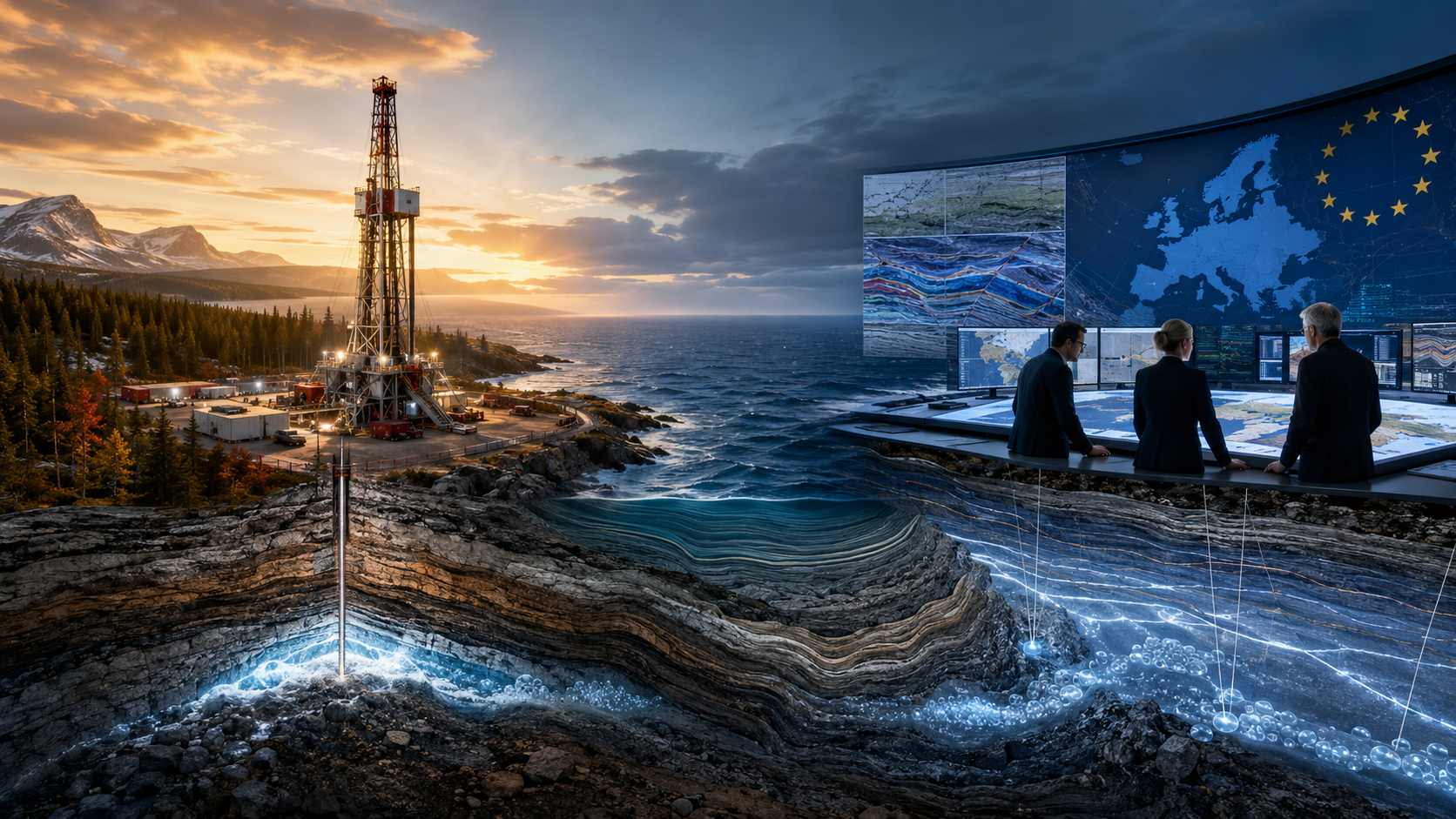
France’s Lorraine discovery—where test wells encountered naturally occurring hydrogen at commercially interesting flow rates—has catalysed a wave of exploration across the broader Greater Region, which straddles Belgium, Luxembourg, and western Germany. The REGALOR II research programme is now characterising serpentinisation pathways in the local geology, mapping hydrogen seeps, and assessing whether Belgium’s own subsurface might host analogous reservoirs. Early results suggest that natural hydrogen, if present at scale, could be produced for well under EUR 2/kg, undercutting even the most optimistic electrolyser forecasts and sidestepping renewable-electricity constraints.
For compliance and marketing directors, the implication is strategic: a portfolio approach that layers contracted green hydrogen from BE.Hydrogen electrolysers with optionality on low-carbon geological H₂ may prove more resilient than betting exclusively on one pathway. If Lorraine-style plays materialise in Belgian or Luxembourg territory by the late 2020s, they could supply HY4Link, feed local ammonia or methanol synthesis for e-fuel production (the global e-fuel market is forecast to reach USD 321.05 billion by 2033), and provide a compliance hedge against any delays in electrolyser commissioning or renewable-power availability.
HY4Link, CBAM, and the 2035 countdown
The HY4Link pipeline is envisaged as a hydrogen backbone linking Belgian production hubs to off-takers in Germany and beyond, mirroring the logic of Europe’s wider hydrogen-network proposals. Under current timelines, meaningful volumes must flow by the early 2030s to help industry meet both RED III quotas and the stricter carbon accounting that CBAM will impose on imported steel, fertiliser, and chemicals. Meanwhile, the 2035 deadline for new internal-combustion-engine car sales in the EU—paired with the 2026 carbon-neutral ultimatum for e-fuels—creates a narrow window in which synthetic-fuel producers must scale and demonstrate compliance-grade sustainability.
Natural hydrogen, if integrated into that ecosystem, would not automatically qualify as ‘renewable’ under RED III’s current definitions but could be certified as ultra-low-carbon under life-cycle-assessment rules, easing blending economics and opening additional offtake channels. As exploratory drilling accelerates and REGALOR II data are published, compliance teams should monitor whether Belgian or Luxembourg authorities carve out a regulatory pathway for geological H₂ within national hydrogen strategies and whether such volumes can be injected into HY4Link on favourable terms.
Sources
- E-Fuel Market to Reach USD 321.05 Billion by 2033 as Technology Convergence and Net-Zero Sustainability Priorities Reshape Global Energy Landscape
- E-fuels given 2026 carbon-neutral ultimatum in Europe
- Liquid e-fuels for a sustainable future: A comprehensive review of production, regulation, and technological innovation
Featured image via Unsplash.