

What Canada has actually done and what it has not
In Saskatchewan, MAX Power Mining (CSE: MAXX) is running a multi-well commercial validation programme at the Lawson Complex near Central Butte, within the 475-km Genesis Trend. The sequence is documented: Lawson 1 reached 2,278 m and recorded natural hydrogen free gas flow to surface in December 2025. Lawson 2, drilled in July 2026, logged 831 metres of continuous elevated hydrogen readings — readings stronger than the discovery well. Lawson 3 spudded on 5 August to triangulate the deposit for independent modelling by GLJ Ltd.
The capital has followed. Investor Eric Sprott subscribed C$25 million in May and a further C$10 million in August — C$35 million total on a single play.
Two thousand kilometres east, a second front has opened. Primary Hydrogen Corp. (TSXV: HDRO) staked its Northumberland project in Nova Scotia on 17 August, then the Wallace project on 31 August — six licences, 140 claims, roughly 2,267 hectares in the Cumberland Basin. Northumberland sits directly adjacent to ground held by Koloma and Kavenex Energy. Nova Scotia issued 814 mineral exploration licences in 2025, nearly double the 2024 figure, concentrated in Cumberland County.
The only site producing natural hydrogen for practical use anywhere in the world remains Bourakébougou in Mali — roughly 5 tonnes per year, against 100 million tonnes of hydrogen consumed globally. Geoscientist Arnout Everts, quoted by Radio-Canada, notes the physical difficulty plainly: hydrogen is so volatile and reactive that it escapes through almost anything, and subsurface microbes consume it.
What Europe has and it is not nothing

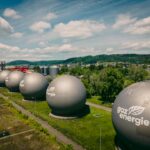
France holds something no other jurisdiction does: the first natural hydrogen exploration permit ever granted in the European Union. Française de l’Énergie’s Trois Évêchés permit covers 2,254 km² in Moselle. Its PTH-2 borehole confirmed 49.6 % hydrogen at 2,426 metres in June 2026, at a total depth of 3,655 m. REGALOR II certification is expected in 2027; the declared production target is late 2028.
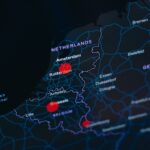
At Union level, the Commission awarded Getech a pan-EU prospectivity mapping contract in July 2026, covering all 27 member states, with results due in 2027. Belgium runs the BE.Hydrogen geological survey programme — a mapping exercise, with no accumulation, flow or commercially exploitable resource confirmed on Belgian territory to date.
| Canada | European Union | |
|---|---|---|
| Legal framework | Saskatchewan: licences case by case. Nova Scotia: Act passed April 2026, not yet in force |
First EU exploration permit granted (Trois Évêchés, 2,254 km²) |
| Drilling | 3 validation wells at Lawson, 2,278 m+, third-party evaluation under way | PTH-2: 49.6% H₂ at 2,426 m, 3,655 m total depth |
| Private capital | C$35m from a single investor in 3 months; Koloma ~$403m raised | Mantle8 €31m Series A; FDE listed on Euronext |
| Public funding | Provincial licensing revenue; no dedicated federal programme identified | Getech mapping: just over €1 million, 27 member states |
| Independent certification | GLJ Ltd. evaluation pending | REGALOR II expected 2027 |
| Commercial production | None. No date announced | None. FDE target: late 2028 |
The asymmetry nobody states
Headlines frame this as a race between two runners. It is not. The two sides are not at the same stage, and they are not measured on the same axis.
France has a permit and a certification pathway, with no producing well. Canada has drilling activity and capital, with an incomplete legal framework. These are different things, and each is hard to acquire in the other’s way.
A Canadian province can legislate a natural hydrogen framework in eighteen months — Nova Scotia already passed its Act, and only commencement is outstanding. A subsurface resource, by contrast, either exists or does not.
If the EU’s lead rests on being first to write the rules, it is a lead with a short half-life.
There is a second asymmetry, and it is uncomfortable. Compare the orders of magnitude: C$35 million subscribed by one Canadian investor on one project in three months, against just over €1 million for mapping the prospectivity of an entire continent. Both numbers are appropriate to their purpose — one funds steel in the ground, the other funds knowledge. But they describe different levels of institutional commitment.
Europe has seen this film before
The pattern is familiar enough to have a name in Brussels policy circles: regulate first, manufacture elsewhere. It played out on photovoltaics, on lithium-ion cells, and it is playing out on electrolysers, where Chinese manufacturers now hold the top capacity positions while European firms hold the project awards.
The mechanism is not incompetence. It is that regulatory instruments and industrial instruments move at different speeds. Directives take years to negotiate and apply uniformly; a provincial licence takes months and applies immediately.
Natural hydrogen may or may not follow the same path. What can be said is that the ingredients are present: an early European scientific and legal position, a faster-moving jurisdiction elsewhere, and private capital that has already chosen where to go.

What a framework worthy of the lead would contain
This is where the discussion is usually vague. Four elements would be concrete and, on the evidence above, are currently missing or incomplete.
| → | A dedicated legal regime for native hydrogen — In most member states, natural hydrogen falls awkwardly between mining code and hydrocarbon regulation. France created a specific category; most have not. Without one, an explorer does not know what it is applying for, or what it would own. |
| → | A decision timeline explorers can plan against — Capital allocates to predictability. A published maximum period between application and decision does more to attract exploration than any subsidy. |
| → | Certification standards defined before the resource exists — REGALOR II will be the first of its kind. If each member state improvises its own methodology, cross-border comparison becomes impossible and every project is evaluated on its own terms — which suits nobody, least of all investors. |
| → | Clarity on what happens after Getech reports — A prospectivity map identifies where to look. It does not say who may look, under what conditions, or on what timescale. The 2027 delivery date is an opportunity to have that answer ready — or a deadline that will pass without one. |
What would prove this article wrong
First. If REGALOR II confirms a commercially recoverable Lorraine resource in 2027 and FDE produces at scale in 2028, Europe will have converted a regulatory lead into an industrial one, and the Canadian activity will read as catching up.
Second. Lawson 3 and the GLJ evaluation may show a system that is real but not commercially producible — the outcome most geoscientists would consider likeliest at this stage, given how few natural hydrogen systems anywhere have survived contact with a reservoir engineer.
Third. The comparison of institutional commitment above weighs a mapping contract against a drilling programme. That is not a like-for-like comparison, and a fuller accounting of national research funding across member states might narrow the gap considerably.
Europe was first to grant a permit. Canada was first to put three rigs on one structure. Only one of those advantages is difficult to copy — and it is not the permit.
None of this argues that Europe is losing. It argues that the two assets it holds — the first exploration permit, the first continental map — are documents, and documents expire faster than fields. The Getech report lands in 2027, in the same window as REGALOR II. That is either a remarkable alignment of evidence and decision, or a year in which two documents are published and nothing follows.
Which of the two it turns out to be is a policy choice, not a geological one.
Nature of the evidence. This analysis rests on company announcements, press coverage and public regulatory documents. Drilling results, hydrogen readings and capital figures are as declared by the parties and have not been independently verified. Gas readings during drilling are not a resource estimate.
No production anywhere. Neither MAX Power nor FDE has produced natural hydrogen commercially. FDE’s €0.50/kg target and late-2028 date are declared objectives, not certified outcomes. REGALOR II may confirm, revise or fail to confirm the Lorraine resource.
Belgium. BE.Hydrogen is a geological survey programme. No natural hydrogen accumulation, flow or commercially exploitable resource has been confirmed on Belgian territory to date.
Informational only. Not investment, legal or commercial advice. © 2026 BESS Energie SRL · BCE 0698.949.732 · e-fuels.ai