



The ECO2Fuel Process: Elegant Chemistry, Electricity-Hungry Reality
ECO2Fuel’s reactor electrochemically reduces CO₂ — captured from industrial point sources — combined with renewable electricity to synthesise liquid hydrocarbons that are chemically equivalent to conventional petrol or diesel. The approach bypasses the classical two-step Power-to-Liquid route (electrolysis → Fischer-Tropsch) and collapses it into a single electrochemical cell, potentially cutting capital cost and conversion losses. The project runs through September 2026, giving the consortium months of operational data that will anchor the next generation of techno-economic models.
The honest caveat the site’s editorial rules demand: for road vehicles, e-fuels produced via electrolysis carry a crushing energy penalty — roughly 13–20% well-to-wheel efficiency versus 70–80% for a battery-electric drivetrain, meaning approximately five times more renewable electricity is consumed for the same kilometre travelled. This is the central objection raised by Transport & Environment and the ICCT, and it is a legitimate one. E-fuels in light road vehicles are not the answer. Their genuine advantage lies in sectors that batteries cannot serve: long-haul aviation, deep-sea shipping, heavy long-distance trucking, and the roughly 1.4 billion combustion-engine vehicles already on the road that will not be replaced overnight.
Geological Hydrogen as Feedstock: The Efficiency Objection Dissolves
Here is where the geological-hydrogen science lens transforms the debate. The efficiency objection is, at its core, an argument about the cost of renewable electricity consumed to split water. If hydrogen arrives not from an electrolyser but from a geological source — extracted like natural gas — the renewable electricity bill for hydrogen production drops to near zero. In Lorraine, the PTH-2 well confirmed 49.6% H₂ concentration at 2,426 metres depth in June 2026, and the project has drilled the world’s deepest dedicated natural hydrogen well at 3,655 metres. The REGALOR II research programme and the Française de l’Énergie (FDE) concession work are building the subsurface data architecture needed to quantify whether such concentrations can be produced at commercial flow rates. Meanwhile, Belgium’s BE.Hydrogen programme — launched March 2026 as a geological survey — is mapping whether analogous serpentinisation-driven accumulations exist beneath Belgian territory; no deposit has been confirmed there, and the programme remains exploratory.
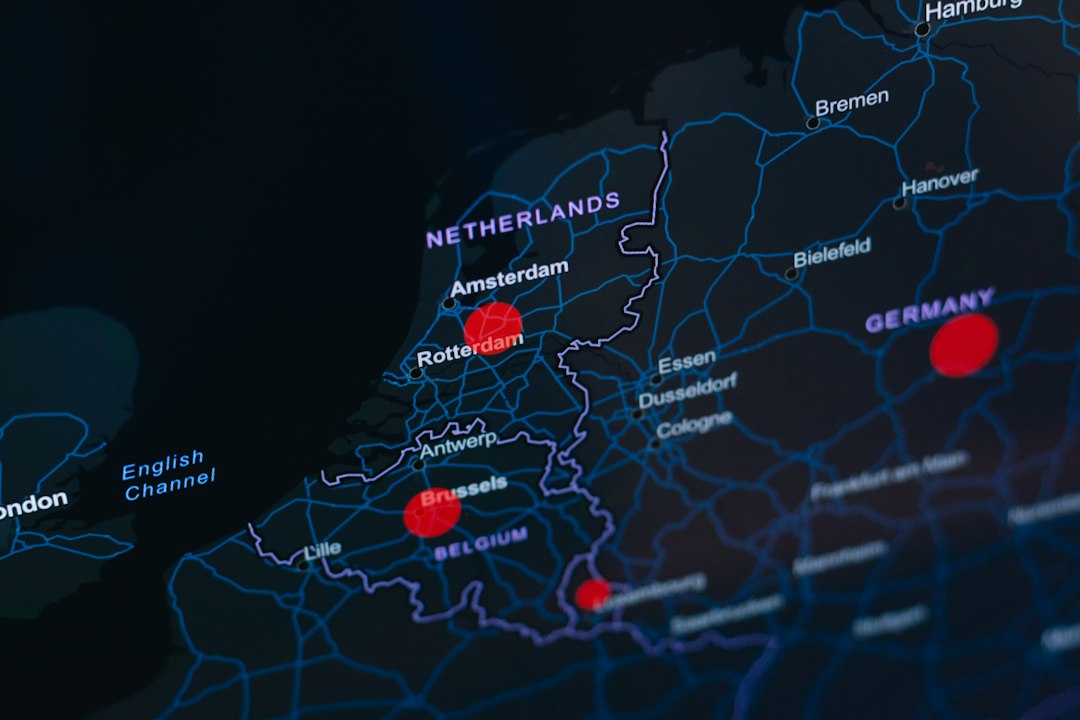
Feed geological hydrogen into an ECO2Fuel-style electrochemical CO₂ reduction reactor and the system’s economics shift profoundly. The CO₂ input can be drawn from industrial capture streams — for which the IEA’s August 2026 update shows global potential capacity approaching 425 Mt per year, even as many projects face 2035 timelines. The HY4Link pipeline infrastructure (~230 km, spanning the Greater Region across France, Luxembourg, Belgium and Germany) is designed precisely to move hydrogen molecules to industrial demand centres where such CO₂ streams exist. A digital-twin layer on that pipeline network — the kind of AI-driven pressure, flow and quality optimisation that justifies this portal’s .ai domain — would allow operators to route natural hydrogen selectively to high-value chemical reduction applications like ECO2Fuel rather than defaulting to combustion.
Technical Metrics, AI Optimisation, and the Road to Scalability
The Canada PNAS study on serpentinisation geochemistry and the REGALOR II dataset are generating subsurface models that AI tools can interrogate to predict hydrogen flux, purity profiles and reservoir longevity — exactly the performance metrics that a pipeline digital twin requires as boundary conditions. Purity matters enormously: ECO2Fuel’s electrochemical catalyst is sensitive to contaminants, so real-time AI-driven gas-quality monitoring at the well-head, cross-referenced with pipeline telemetry along HY4Link’s ~230 km corridor, becomes a genuine engineering requirement rather than a marketing talking point. That is the specific technical application that earns the .ai extension its credibility on this platform.
Scalability remains the open question. ECO2Fuel at 1 MW is a pilot; commercial Power-to-Liquid plants will need to be two to three orders of magnitude larger. The IEA notes that despite capacity growth of more than 10% in operational CCUS and roughly 25% in storage, many projects are delayed to 2035 — a reminder that the carbon-capture half of the equation is itself not yet solved at scale. Geological hydrogen’s contribution, if Lorraine and analogous projects mature, would be to decouple e-fuel production from the renewable electricity buildout, letting Power-to-Liquid plants run on subsurface hydrogen while electrolysers are reserved for grids and industrial heat.
Sources
- Sunfire Ships 100MW Electrolysers to RWE’s Green Hydrogen | Fuel Cells Works
- Belgium launches a national exploration programme for natural hydrogen | Institute of Natural Sciences
Featured image via Unsplash.