

A Milestone, but the Feedstock Problem Remains
Clearing the 2% ReFuelEU blend threshold in 2025 is a genuine regulatory achievement, and the Early Movers’ Coalition — now including Austria and France — gives synthetic e-fuel producers a demand signal they can bank. Yet the coalition’s ambition runs directly into an unresolved upstream constraint: power-to-liquid SAF depends on green hydrogen, which today is almost entirely produced by electrolysis from renewable electricity.
The ICCT puts the well-to-wheel efficiency of the e-fuel pathway at around 16%, compared with 72% for a battery-electric vehicle — a gap of over four times. In aviation, where batteries cannot serve long-haul routes, this efficiency penalty is an accepted cost of decarbonisation. The argument is not about whether to use e-fuels in aviation; it is about how cheaply the hydrogen feedstock can be delivered. That is precisely where geological hydrogen enters the conversation.
Geological Hydrogen as a Low-Cost Feedstock Vector
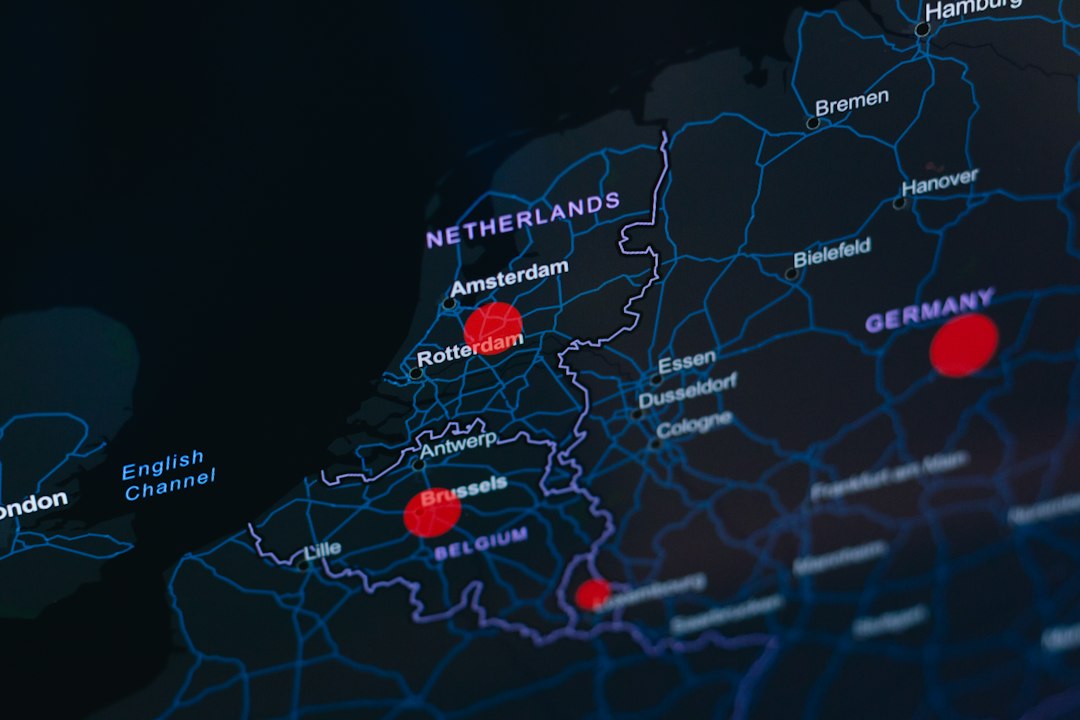
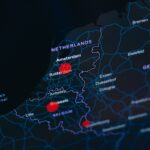
The efficiency objection to e-fuels weakens considerably when the hydrogen is extracted from the subsurface rather than manufactured by electrolysis, because no renewable electricity is consumed in its production. In the Greater Region straddling France, Luxembourg, Belgium and Germany, two converging programmes are building the technical basis to assess that potential. The Lorraine basin’s PTH-2 well — confirming 49.6% H₂ concentration at 2,426 m depth in June 2026 and representing the world’s deepest natural hydrogen well at 3,655 m — anchors the REGALOR II / FDE research programme. Belgium’s separately launched BE.Hydrogen initiative (€3.5 million from ETS revenues, approved by the Council of Ministers in March 2026) is conducting geological mapping of Belgian subsoil; no commercially exploitable accumulation has been confirmed on Belgian territory. Neither programme is yet at production stage, but both generate subsurface data that could, if positive, redirect SAF cost models significantly.
The analogy with Canada is instructive. A PNAS-published study on Canadian geological hydrogen traced extensive serpentinisation-driven accumulations, demonstrating that subsurface H₂ is not geographically exotic. If the Greater Region survey data converge with the Lorraine well results, the HY4Link cross-border pipeline infrastructure (~230 km) already in planning could serve as a natural-hydrogen distribution corridor to SAF production nodes — an AI-optimised digital-twin pipeline architecture being discussed precisely because the routing crosses four jurisdictions with non-uniform RED III implementation.
AI, Data Infrastructure and the Technology Case
The .ai dimension of this analysis is not cosmetic. Optimising subsurface hydrogen extraction — managing reservoir pressure, predicting flow rates from serpentinisation zones, scheduling injection and withdrawal against variable SAF demand — requires the same machine-learning stack applied to conventional gas fields, but with far sparser historical data. Pipeline digital twins for a ~230 km cross-border corridor like HY4Link must reconcile real-time sensor feeds with regulatory compliance across German, French, Luxembourgish and Belgian permitting regimes. AI-assisted conformance monitoring is not optional; it is the only technically tractable path given the regulatory complexity exposed by HY4Link’s current silent period, itself a symptom of the EU’s unresolved cross-border H₂ infrastructure governance gap under RED III.
Germany’s planned €2 billion synthetic aviation fuel cost-reduction scheme signals that governments understand the economics must improve. Geological hydrogen, if confirmed at commercial scale in the Greater Region, would attack that cost curve from the feedstock side rather than the subsidy side — a structurally more durable outcome for SAF producers building 20-year offtake contracts.
Sources
- Austria and France Form Transnational Green Aviation SAF ReFuelEU Coalition
- ReFuelEU Aviation · blend trajectory & scope
- Updates about RED III and ReFuelEU Aviation in Germany
- Belgium launches a national exploration programme for natural hydrogen
Featured image via Unsplash.
This is not an official site. It is published by a private company and does not emanate from any public authority, institutional programme, government department or research organisation. It represents none of them and speaks for none of them in any capacity.
Nature of the content. Articles are documentary summaries drawn from cited public sources. They may contain inaccuracies, omissions or information that has since become outdated. No financial, technical, legal or investment advice is provided.
Always verify against primary sources. For any information concerning a public programme, a regulation or an institutional project, only the publications of the competent authority are authoritative.
Non-affiliation. This site is not affiliated with any exploration company or public research programme. The terminology used is generic.
© 2026 BESS Energie SRL · BCE 0698.949.732 · info@bess.be