




PtL Is Real — and Its Achilles Heel Is the Electrolyser
AirPlant One demonstrates that producing e-Jet fuel and e-Naphtha from CO₂ and renewable electricity is technically achievable at commercial scale. The process is elegant in principle: capture CO₂, split water via electrolysis, combine the resulting hydrogen with the CO₂ through Fischer-Tropsch or methanol-to-jet pathways, and output drop-in liquid fuels compatible with existing aircraft and infrastructure. No new engine, no new airport fuelling system required.
The brutal arithmetic, however, is well established. A PtL powertrain delivers roughly 13–20% well-to-wheel efficiency compared with 70–80% for a battery-electric vehicle — meaning an e-fuel car consumes approximately five times more renewable electricity per kilometre than a BEV. Transport & Environment, the ICCT and multiple EU-level studies cite this gap as the decisive argument against e-fuels in road transport. PtL’s genuine domain is where batteries cannot reach: long-haul aviation, deep-sea shipping, heavy long-distance freight, and the roughly 1.4 billion combustion engines already in service worldwide.
Geological Hydrogen Rewrites the Input Cost Equation
Here is where the efficiency objection loses much of its force. The argument is fundamentally about the cost of the upstream electricity needed to manufacture hydrogen by electrolysis. If hydrogen is not electrolytic but geological — extracted from a subsurface accumulation rather than produced by splitting water — the renewable electricity penalty disappears from the input side entirely. Lorraine’s PTH-2 well, which confirmed a 49.6% hydrogen concentration at 2,426 m depth in June 2026 and reached the world-record depth of 3,655 m, is the most technically significant data point yet from the REGALOR II research programme. If the reservoir economics prove commercial, that hydrogen could feed a PtL synthesis unit with a feedstock carbon intensity orders of magnitude below electrolytic routes.
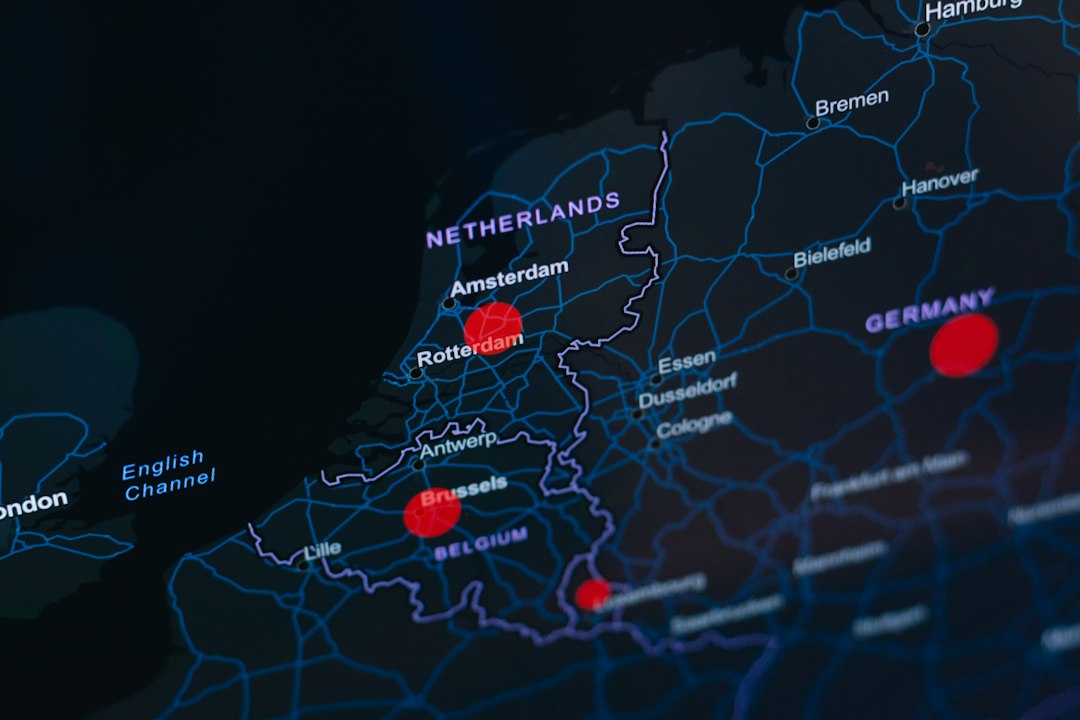
The HY4Link pipeline project, spanning approximately 230 km across the Greater Region (France, Luxembourg, Belgium, Germany), is the infrastructure backbone that would connect such geological sources to industrial offtakers — including, in principle, PtL facilities. Belgium’s BE.Hydrogen programme, launched in March 2026, is conducting a geological survey to assess whether similar subsurface hydrogen potential exists on Belgian territory; no deposit has been confirmed there, but the regional survey logic reinforces the cross-border infrastructure case that HY4Link represents.
AI-Driven Process Optimisation: Where the .ai Domain Earns Its Place
The performance metrics that matter most to PtL project developers — hydrogen purity curves, CO₂ capture efficiency at varying loads, Fischer-Tropsch catalyst lifetime, pipeline pressure profiles — generate continuous high-dimensional data streams. Machine-learning models trained on geological well logs from programmes like REGALOR II and PTH-2 can predict hydrogen concentration and flow-rate profiles before drilling, slashing exploration risk and capital commitment. At the plant level, AI-based digital twins of electrolysers and synthesis reactors allow operators to maintain peak efficiency across fluctuating renewable-power inputs. The Canada PNAS study on serpentinisation kinetics adds a further modelling dimension: understanding the geochemical reaction rates that generate natural hydrogen underground informs both reservoir lifetime estimates and the AI frameworks used to schedule extraction against downstream PtL production schedules. This convergence of geological data science and process AI is the editorial mandate of naturalhydrogen.ai — and AirPlant One’s opening makes the technical case for it more urgent than ever.
Sources
Featured image via Unsplash.