




CCS at Industrial Scale: What Sluiskil Actually Proves
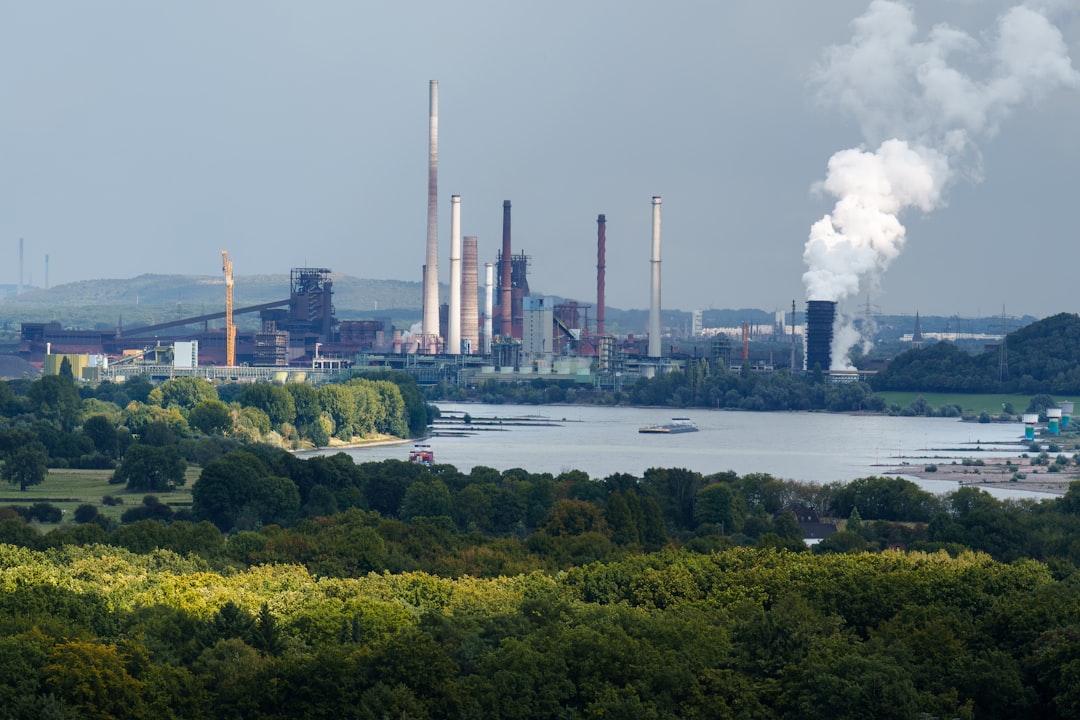
The Yara Sluiskil project demonstrates that commercial-scale geological CO₂ disposal is now technically and financially executable in the European industrial context. Capturing 800,000 tonnes per year from a single fertiliser site, liquefying that stream and routing it to Norwegian subsea formations is not a pilot — it is a repeatable template. For the broader energy transition, the project validates the full chain: point-source capture, conditioning, transport, and permanent geological sequestration.
For CO₂ utilisation advocates — those who prefer captured carbon to become feedstock for e-methanol, synthetic kerosene or other RFNBOs rather than being buried — Sluiskil is a double-edged signal. It confirms the infrastructure can be built; it also shows that pure sequestration, without utilisation, is the path operators are currently choosing at scale.
The Geological Subsurface: CO₂ Storage vs. Natural Hydrogen Prospecting
Here the geological hydrogen community has a direct interest. The same sedimentary and crystalline basement formations that are candidates for CO₂ storage are often the same horizons where serpentinisation reactions generate natural H₂. In Lorraine, the REGALOR II programme and Français de l’Énergie’s PTH-2 well — which confirmed 49.6% H₂ concentration at 2,426 m in June 2026, making it the world’s deepest confirmed natural hydrogen well at 3,655 m total depth — are demonstrating that productive geological hydrogen systems exist at depths and in rock types that overlap with CCS target formations. Subsurface resource planning in the Greater Region will increasingly need to reconcile these competing uses. AI-assisted seismic interpretation and 3-D geological mapping are already being applied in natural hydrogen prospecting to accelerate formation characterisation and reduce the risk of this exact conflict — identifying hydrogen-generative ultramafic units before CO₂ injection programmes lock in storage rights.
Belgium’s BE.Hydrogen programme, launched in March 2026 as a geological survey with no confirmed deposits or commercially exploitable resources, is asking the same subsurface questions from a different starting point: where does the basement geology permit serpentinisation, and where does it not? The Canada PNAS study on craton-hosted natural hydrogen adds another data point to the global picture. None of these programmes have yet reached the stage of competing directly with CCS for pore space — but the regulatory frameworks that will govern that competition are being written now.
Infrastructure Convergence: Pipelines, Storage and the HY4Link Corridor
The approximately 230 km HY4Link pipeline concept, targeting natural hydrogen transport across the Greater Region, illustrates how geological H₂ development demands its own dedicated infrastructure logic — distinct from the repurposed CO₂ transport corridors being designed for projects like Sluiskil’s Norwegian export route. The two value chains are not inherently incompatible: CO₂ captured from industrial emitters can, in principle, serve as feedstock for synthetic fuels manufactured with natural hydrogen, closing a carbon loop that electrolytic hydrogen alone cannot close at competitive cost. Whether that integration happens depends on whether project developers, regulators and subsurface rights holders coordinate early enough.
Sources
Featured image via Unsplash.
This is not an official site. It is published by a private company and does not emanate from any public authority, institutional programme, government department or research organisation. It represents none of them and speaks for none of them in any capacity.
Nature of the content. Articles are documentary summaries drawn from cited public sources. They may contain inaccuracies, omissions or information that has since become outdated. No financial, technical, legal or investment advice is provided.
Always verify against primary sources. For any information concerning a public programme, a regulation or an institutional project, only the publications of the competent authority are authoritative.
Non-affiliation. This site is not affiliated with any exploration company or public research programme. The terminology used is generic.
© 2026 BESS Energie SRL · BCE 0698.949.732 · info@bess.be