





What BE.Hydrogen Is — and What It Is Not
The BE.Hydrogen programme, launched by the Belgian Institute of Natural Sciences, is a geological survey, not a production project. No natural hydrogen accumulation, flow rate, or commercially exploitable resource has been confirmed anywhere on Belgian territory. The programme’s mandate is to map subsoil formations and assess whether serpentinisation or other geological processes capable of generating molecular hydrogen are present at depth. Compliance officers should treat BE.Hydrogen as a data-collection initiative operating on a multi-year timescale — analogous to the early-stage REGALOR II research that preceded the confirmed PTH-2 results in neighbouring Lorraine, where 49.6% H₂ concentration was recorded at 2,426 metres depth, making it the world’s deepest confirmed natural hydrogen well at 3,655 metres.
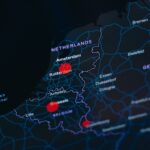
Belgium’s position within the Greater Region — sharing geology and infrastructure corridors with Lorraine — makes the survey scientifically logical. The planned HY4Link pipeline, approximately 230 km in length, is designed to connect hydrogen production and demand nodes across this transboundary zone. If Belgian surveys eventually indicate viable geology, integration with such infrastructure becomes a strategic, if distant, planning question.
RED III, ReFuelEU and the 2030–2032 Compliance Window
While BE.Hydrogen plays out over years, the regulatory clock is already running. Switzerland’s formal adoption of ReFuelEU Aviation — confirmed active from 1 January 2026 — means fuel suppliers at Zurich and Geneva airports must now demonstrate a 2% SAF blend, scaling to 70% by 2050. RED III tightens renewable energy obligations across EU member states on a parallel track, with 2030 interim targets creating near-term pressure on corporate sustainability reporting and supply-chain sourcing. For compliance directors, the 2030–2032 window is not a planning horizon — it is an execution deadline.
Geological hydrogen, were it ever confirmed and produced in the Greater Region, could qualify as a renewable fuel of non-biological origin (RFNBO) under RED III, potentially counting toward both transport sub-targets and industrial decarbonisation quotas. That prospect remains speculative for Belgium specifically, but the Lorraine precedent — and the scientific methodology being borrowed by BE.Hydrogen — means the regulatory pathway is at least conceptually mapped. Compliance teams with operations in France, Luxembourg, or Belgium should begin scenario-planning for a post-2030 supply environment that could include geological H₂ as a feedstock option.
Strategic Implications for Marketing and Compliance Directors
The practical near-term message is one of watchful preparedness. BE.Hydrogen will generate geoscientific data, not molecules — and certainly not before 2030 targets require action. Companies cannot defer RED III or ReFuelEU compliance on the expectation of Belgian geological hydrogen coming online. The mandatory blend schedules are fixed; penalties for non-compliance accumulate from day one of the obligation period.
What the survey does offer is optionality intelligence. Organisations operating along the Lorraine–Luxembourg–Belgium corridor should monitor BE.Hydrogen outputs as part of their long-range feedstock diversification strategy, particularly if they are invested in e-methanol, green ammonia, or RFNBO hydrogen supply chains where a domestic geological source could reduce import dependency and CBAM exposure post-2026. The carbon border adjustment mechanism creates a direct cost incentive to source low-carbon hydrogen from within the EU rather than from third countries — and a confirmed geological source in Belgium, if it ever materialises, would sit inside that boundary.
Sources
- Belgium launches a national exploration programme for natural hydrogen | Institute of Natural Sciences
- BE.Hydrogen – Belgium’s Natural Hydrogen Programme
Featured image via Unsplash.