


ReFuelEU Mandates and the SAF Cost Gap
ReFuelEU Aviation sets binding SAF blending obligations that ramp through the 2030s, with PtL e-fuels carrying a dedicated sub-mandate. The Dutch fund targets blending above those floors for 2027–2029, acknowledging that market pricing alone will not close the cost gap in this decade. EU Commission approval is still required before disbursements can begin. For compliance officers and airlines contracting SAF volumes now, the fund provides a temporary bridge — but the underlying production-cost problem remains unsolved by subsidy alone.
The central efficiency objection to PtL e-SAF is well-documented: well-to-wake, the pathway consumes roughly five times more renewable electricity per unit of propulsion than a battery-electric drivetrain. For road transport, that trade-off is hard to justify. For long-haul aviation — where battery energy density cannot substitute — there is no comparable alternative, which is precisely why regulators are willing to fund the premium. The efficiency argument, however, weakens considerably if the hydrogen feedstock is extracted geologically rather than manufactured by electrolysis, because no renewable electricity is consumed at the production stage.
Geological Hydrogen as a PtL Feedstock: the Lorraine Data Point
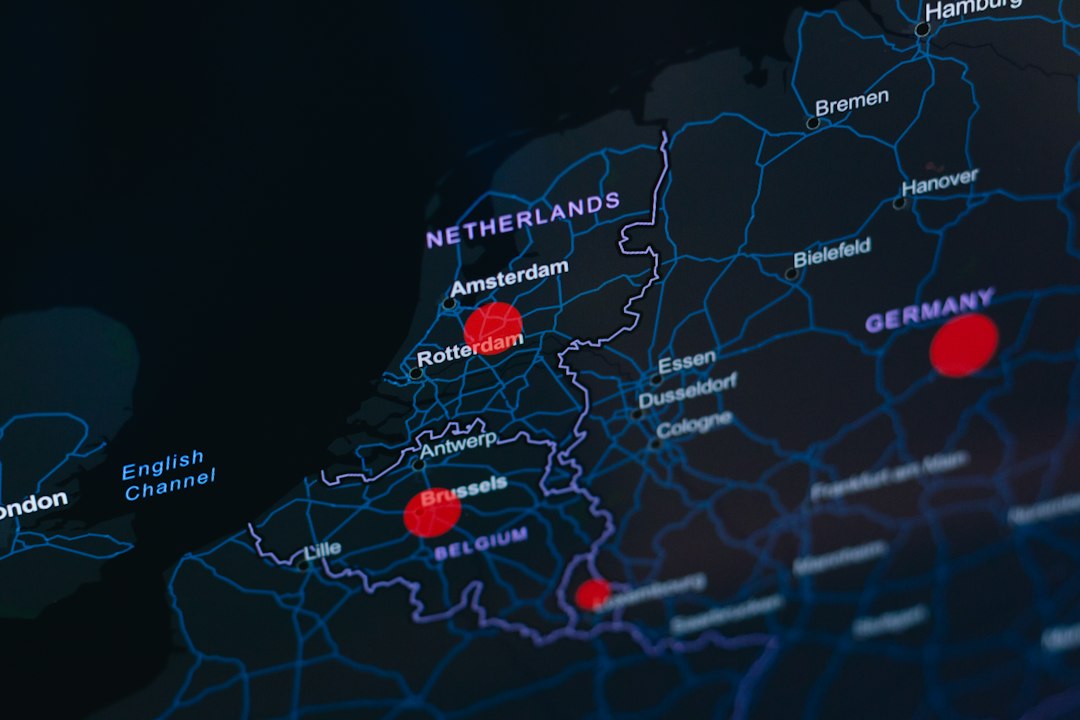
The PTH-2 well in Lorraine (Greater Region) confirmed 49.6% H₂ concentration at 2,426 m in June 2026, making it the world’s deepest confirmed natural hydrogen well at 3,655 m total depth. If subsurface flows prove commercially extractable, the hydrogen could reach industrial users via infrastructure already under development: the HY4Link pipeline, approximately 230 km of cross-border capacity connecting Belgium, Luxembourg, France and Germany, is designed to move hydrogen across the Greater Region and is navigating EU RED III certification frameworks in parallel. A geological H₂ source feeding that corridor would represent a fundamentally different cost structure for any downstream PtL-SAF producer connected to it.
Belgium’s BE.Hydrogen programme, approved in March 2026 with a €3.5 million geoscientific survey budget (with up to €2.7 million additional possible under the adjacent federal initiative), is a subsurface mapping exercise — no accumulation or commercially exploitable resource has been confirmed on Belgian territory. The programme’s value to SAF planners is prospective: it extends the geological survey footprint of the Greater Region and could, in time, identify whether the serpentinisation-driven hydrogen system observed in Lorraine has cross-border expression. The REGALOR II research framework and the broader PNAS-cited Canada study reinforce that geological H₂ is a global phenomenon, not a single anomaly.
AI-Driven Subsurface Analytics: the Technical Edge
Connecting geological hydrogen prospectivity to SAF supply-chain planning requires the kind of multi-variable subsurface modelling that is now being accelerated by machine-learning tools: integrating seismic data, geochemical logs, isotopic signatures and production-rate projections across heterogeneous rock formations. The .ai domain of this portal reflects that analytical orientation — the site aggregates technical performance data, regulatory metrics and geoscientific outputs to serve engineers and compliance officers, not to represent any official programme. Programmes such as BE.Hydrogen are operated by their respective institutional bodies; primary documentation should be sought at their official sources.
For the Dutch SAF fund specifically, the near-term decision variables are regulatory (EU Commission sign-off), logistical (Schiphol blending infrastructure) and contractual (airline offtake agreements). The longer-term variable — one that fund designers would be prudent to model — is whether geological hydrogen from the Greater Region enters the hydrogen market at a cost that resets PtL economics before the 2027–2029 disbursement window closes.
Sources
- RED III: what the EU renewable energy directive means for SAF
- European Council formally adopts RED III and ReFuelEU Aviation into law
Featured image via Unsplash.
This is not an official site. It is published by a private company and does not emanate from any public authority, institutional programme, government department or research organisation. It represents none of them and speaks for none of them in any capacity.
Nature of the content. Articles are documentary summaries drawn from cited public sources. They may contain inaccuracies, omissions or information that has since become outdated. No financial, technical, legal or investment advice is provided.
Always verify against primary sources. For any information concerning a public programme, a regulation or an institutional project, only the publications of the competent authority are authoritative.
Non-affiliation. This site is not affiliated with any exploration company or public research programme. The terminology used is generic.
© 2026 BESS Energie SRL · BCE 0698.949.732 · info@bess.be