



A Mandate That Cannot Be Lobbied Away
Despite sustained airline objections over cost and feedstock availability, the European Commission used the Wings of Change platform to signal that ReFuelEU blending obligations — including the sub-mandate for RFNBO-derived SAF under RED III — remain intact. For project developers and infrastructure investors, the message is unambiguous: SAF demand backed by regulatory obligation will materialise, and the hydrogen required to produce Power-to-Liquid e-fuels at scale must come from somewhere. That ‘somewhere’ question is what makes geological hydrogen prospecting, currently advancing rapidly in Lorraine and across the Greater Region, strategically relevant to aviation decarbonisation.
The efficiency objection to e-fuels in road transport — the ICCT puts the well-to-wheel efficiency of the e-fuel pathway at roughly 16%, versus 72% for a battery-electric vehicle — carries real weight for cars and vans, where batteries are a mature alternative. Aviation is a fundamentally different case: energy density and infrastructure constraints mean liquid fuels will dominate long-haul flight for decades. Here, e-fuels are not competing with batteries; they are the only scalable low-carbon option, and ReFuelEU encodes that logic into law.
The Greater Region: Where Geology Meets the SAF Supply Chain
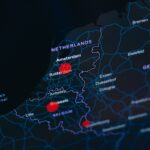
The June 2026 confirmation of 49.6% hydrogen concentration at the PTH-2 well in Lorraine — at 2,426 metres depth, within the REGALOR II research perimeter — positions the Greater Region as one of Europe’s most watched natural hydrogen prospects. The same sedimentary and ophiolitic formations driving serpentinisation-sourced hydrogen in this border zone are now being interpreted with AI-assisted seismic analysis and subsurface mapping tools, accelerating the delineation of potential accumulation zones without the trial-and-error economics of conventional exploration. Belgium’s BE.Hydrogen programme, launched in March 2026 by the Royal Belgian Institute of Natural Sciences, is a geological survey designed to determine whether comparable structures extend across the border — no commercial deposits have been confirmed on Belgian territory.[1]
The infrastructure piece is falling into place in parallel. Luxembourg’s approval on 28 October 2026 of HY4Link Phase 1 — a 40 km pipeline linking Thionville to Pétange and connecting France, Luxembourg, Belgium and Germany — is the first physical segment of an approximately 230 km network.[2] If geological hydrogen from Lorraine and surrounding formations can be produced at scale, HY4Link offers a ready corridor to move it toward SAF production hubs. The regulatory certainty provided by ReFuelEU gives prospective offtakers a reason to sign long-term hydrogen supply contracts, which in turn underwrites the capital needed for deep drilling programmes.
Policy Lock-In as a Catalyst for Geological Hydrogen Investment
Unlike electrolytic green hydrogen, geological hydrogen — if confirmed in commercial quantities — sidesteps the energy-efficiency cascade that makes RFNBO pathways expensive: no renewable electricity is consumed in its production, which means the well-to-wheel efficiency objection largely dissolves for SAF produced from geological H₂. That cost structure, combined with a mandated offtake market under ReFuelEU, is precisely the investment thesis that exploration companies and national research programmes are building their business cases around.
The Commission’s refusal to dilute ReFuelEU targets, even under industry pressure, removes a key regulatory risk from that equation. For engineers and project finance teams working the Lorraine-to-Luxembourg corridor, the policy signal from Brussels is now as important a data point as the PTH-2 assay results themselves: demand is mandated, infrastructure approval is under way, and geological prospecting is advancing. The convergence of those three vectors is what makes the Greater Region one of the more compelling natural hydrogen plays in Europe today.
Sources
- Belgium launches a national exploration programme for natural hydrogen
- Hydrogen: the government approves a 40km gas pipeline
Featured image via Unsplash.
This is not an official site. It is published by a private company and does not emanate from any public authority, institutional programme, government department or research organisation. It represents none of them and speaks for none of them in any capacity.
Nature of the content. Articles are documentary summaries drawn from cited public sources. They may contain inaccuracies, omissions or information that has since become outdated. No financial, technical, legal or investment advice is provided.
Always verify against primary sources. For any information concerning a public programme, a regulation or an institutional project, only the publications of the competent authority are authoritative.
Non-affiliation. This site is not affiliated with any exploration company or public research programme. The terminology used is generic.
© 2026 BESS Energie SRL · BCE 0698.949.732 · info@bess.be